


UI/UX MOBILE APP CASE STUDY • 2022/2023
The problem
Designing a space is often fragmented and overwhelming—something I’ve personally struggled with, which sparked the drive to create a better solution. For many, especially those trying to build a cozy, personal home on a realistic budget, the process means endless scrolling for inspiration, budget compromises, and constant uncertainty about what will actually work together.
The Solution
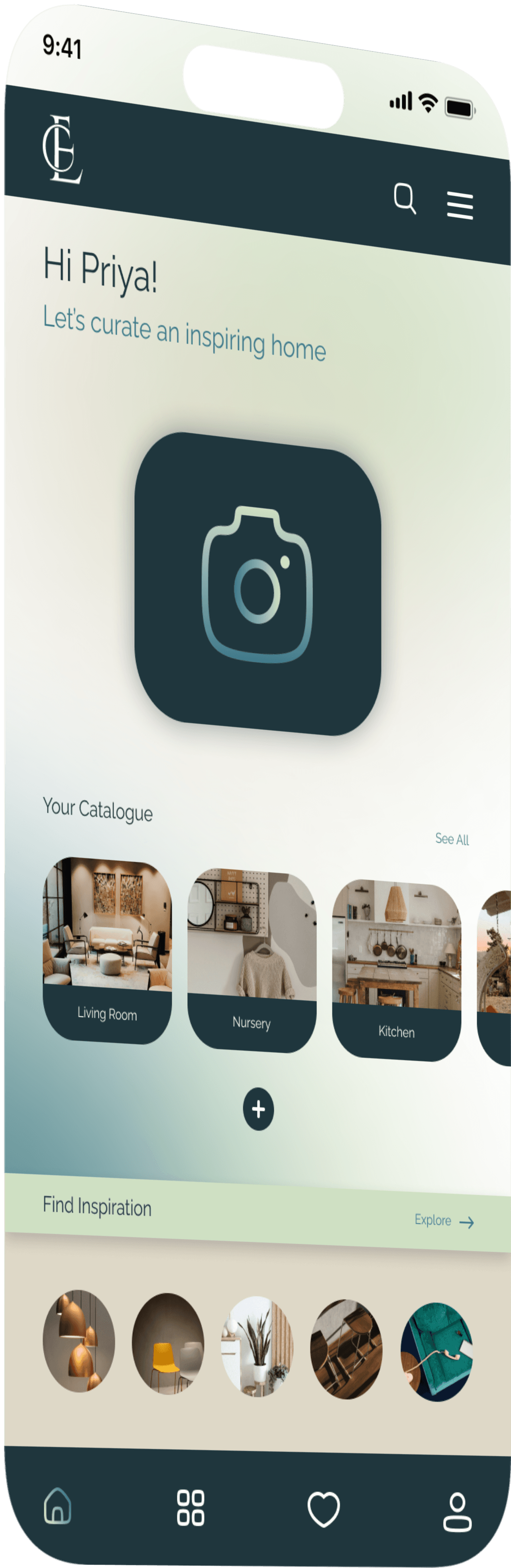
Born from personal experience, this solution simplifies home design into a seamless, intuitive flow. Upload your room, swipe through styles, and set your budget—Casa Edit’s AI generates a cohesive, fully shoppable room plan tailored to your taste. Visualize your space, explore personalized recommendations, and save ideas to your own mood board so decisions feel thoughtful, not rushed. With flexible planning tools and direct third-party purchase links, you can browse, swap, and build your space one piece at a time.
user personas

Emma, 31
The Busy Homeowner
Recently purchased a new house but has limited time and knowledge about interior design. Wants an easy way to transform her living room into a cosy, modern space within budget, with convenient purchasing options built in.

David, 22
The Design Enthusiast
Passionate about design, wants to decorate his small apartment creatively without spending too much. Desires an app that suggests unique décor ideas and affordable product options tailored specifically to his preferences and existing pieces.

Sophie, 42
The Interior Designer
Experienced interior designer who seeks inspiration and product recommendations for her own projects. Wants to discover new trends, find suitable products, and have direct links to purchase — all in one place without the usual research overhead.
User flow & wireframing


Mockups




identified gaps & future thinking
ONBAORDING & PERSONALISATION
Gap
No Style Profile Before First Use
Ai knows nothing about the user's taste, budget, or existing furniture. A short style quiz upfront would ground every suggestion.
Gap
"What I Already Own" Is Invisible to the AI
No way to mark existing pieces as anchors. Suggestions could clash entirely with furniture already in the room.
Future
Passive Taste Learning
Every save and like is a signal. Over time, the app should learn and build your aesthetic profile.
INSPIRATION SECTION
Gap
Inspiration Is Read-Only
Users can browse but can't act - tapping any item in an image should provide purchase options.
Future
Saved Boards As An AI Brief
"Design my room in this style" - the mood board becomes the input, not just passive content.
COMMERCE & CHECKOUT
Hard
Multi-retailer Cart Is Unsolved
One room, three stores? A unified checkout doesn't exist across retailers. An affiliate redirect model may be the realistic path.
Gap
No Budget Input & Regional Limitations
The AI doesn't know your budget spend. Budget-aware suggestions would make recommendations immediately more useful.
Future
Adding Budget Filter
Adding "budget" consideration to the quiz and later an adjustable filter would account for the gap and any changes in the future.
AI CONTROL & ACCURACY
Gap
No Iteration Layer
If you dislike a result there's no natural next step option. "Make it warmer" or "try this style" should be possible without starting over.
Gap
Scale And Proportion
A suggestion piece of furniture might be wider/bigger. Without room dimensions AI can't respect physical space.
Future
Shared Catalogues
Interior decisions are rarely solo. Partners and designers or family members should be able to view, comment and vote on suggestions/ saved items.
These gaps weren't design oversights. Casa Edit was designed before tools like DALL·E, GPT-4V, or real-time product APIs existed at consumer scale. The gaps above are less design failures and more honest collisions with the technology ceiling of the time. The core idea — photograph a space, get a shoppable styled version of it instantly — has since become a direction the entire industry is moving toward. The thinking was ahead of what the tools could deliver.